Septic System Installation in North Dakota
Complete septic system design, permitting, and installation — built for ND soils, frost depths, and county regulations.
Call for a Free EstimateProfessional Septic Installation
Dakota Earthworks installs septic systems throughout Central North Dakota for new construction, system replacements, and failed drainfield repairs. We handle the full process — from coordinating the soil evaluation and permit with your county health department, to setting the tank, excavating the drainfield, and final grade restoration.
North Dakota soils and climate create specific challenges: high clay content, shallow bedrock in some areas, spring frost heave, and dramatic freeze-thaw cycles. We design and install systems that account for all of it, so you don't face failures a few years down the road.
Types of Projects We Handle
- New residential septic systems — full installation for new home builds
- Septic system replacements — old tank and drainfield replacement
- Failed drainfield excavation and replacement
- Conventional gravity-fed systems
- Mound systems for high water table or tight soils
- Infiltrator chamber systems (Quick4) — our preferred drainfield system
- Lift station and pump installation for challenging grade situations
- Emergency septic excavation
- Septic system upgrades for property additions or bedroom additions requiring system expansion
Our Installation Process
Site Evaluation
Soil evaluation and perc test through your county health department to determine system type and sizing.
Permit & Design
Permit application coordinated with McLean, Burleigh, or applicable county. Design based on bedroom count and soil results.
Excavation
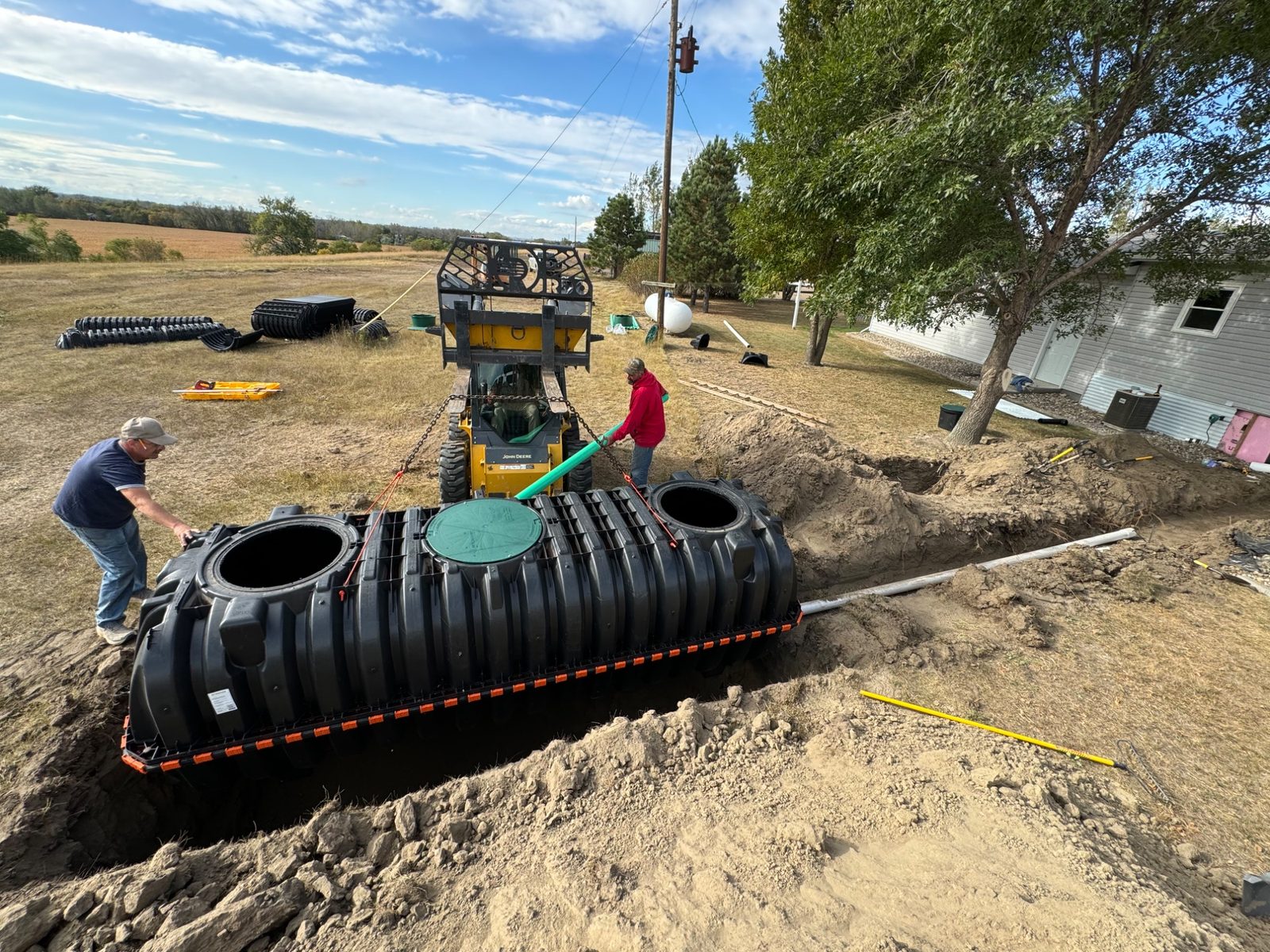
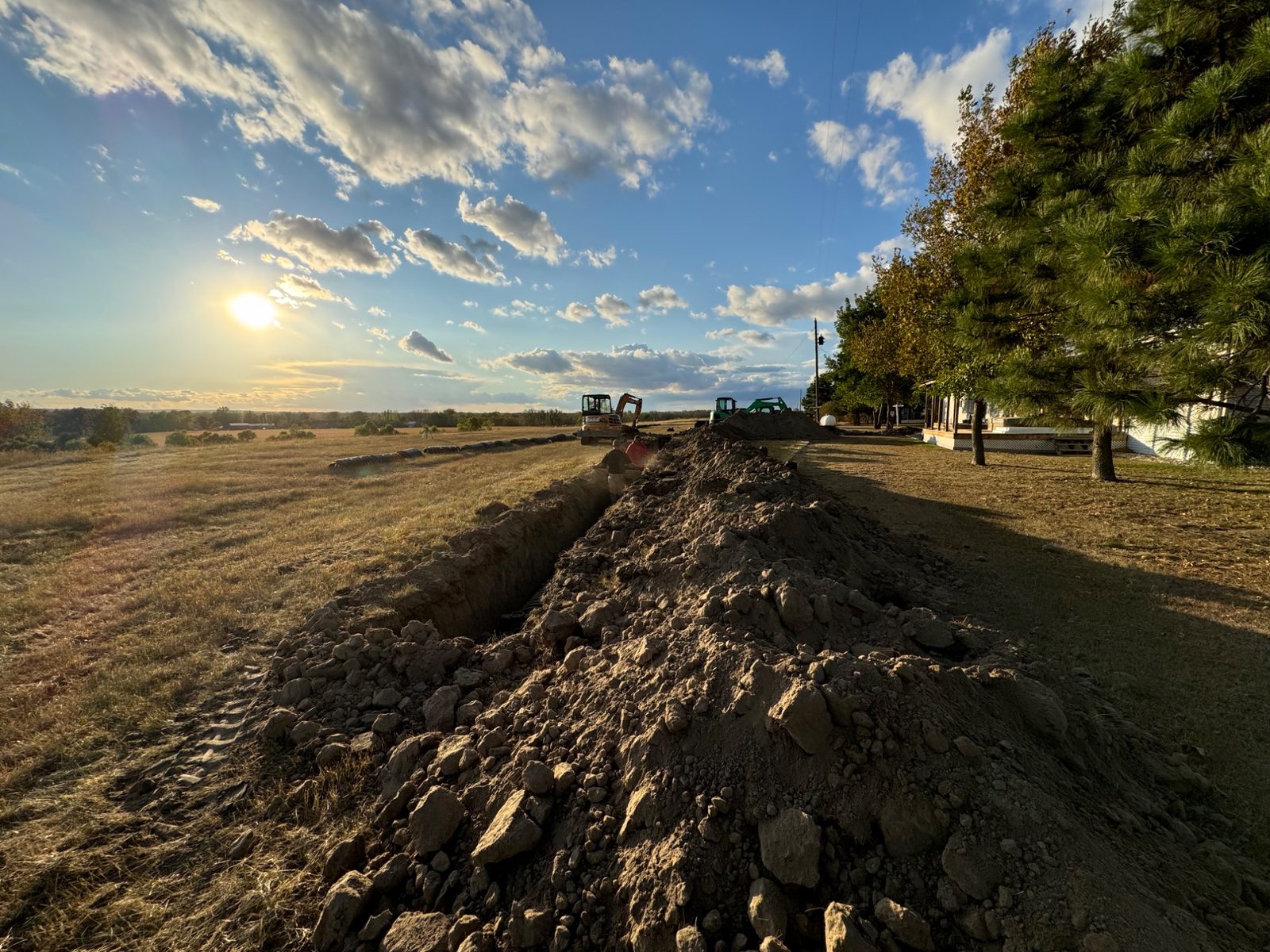
Tank hole, distribution line trenches, and drainfield area excavated to spec. Spoils hauled or spread on site.
Tank & Field
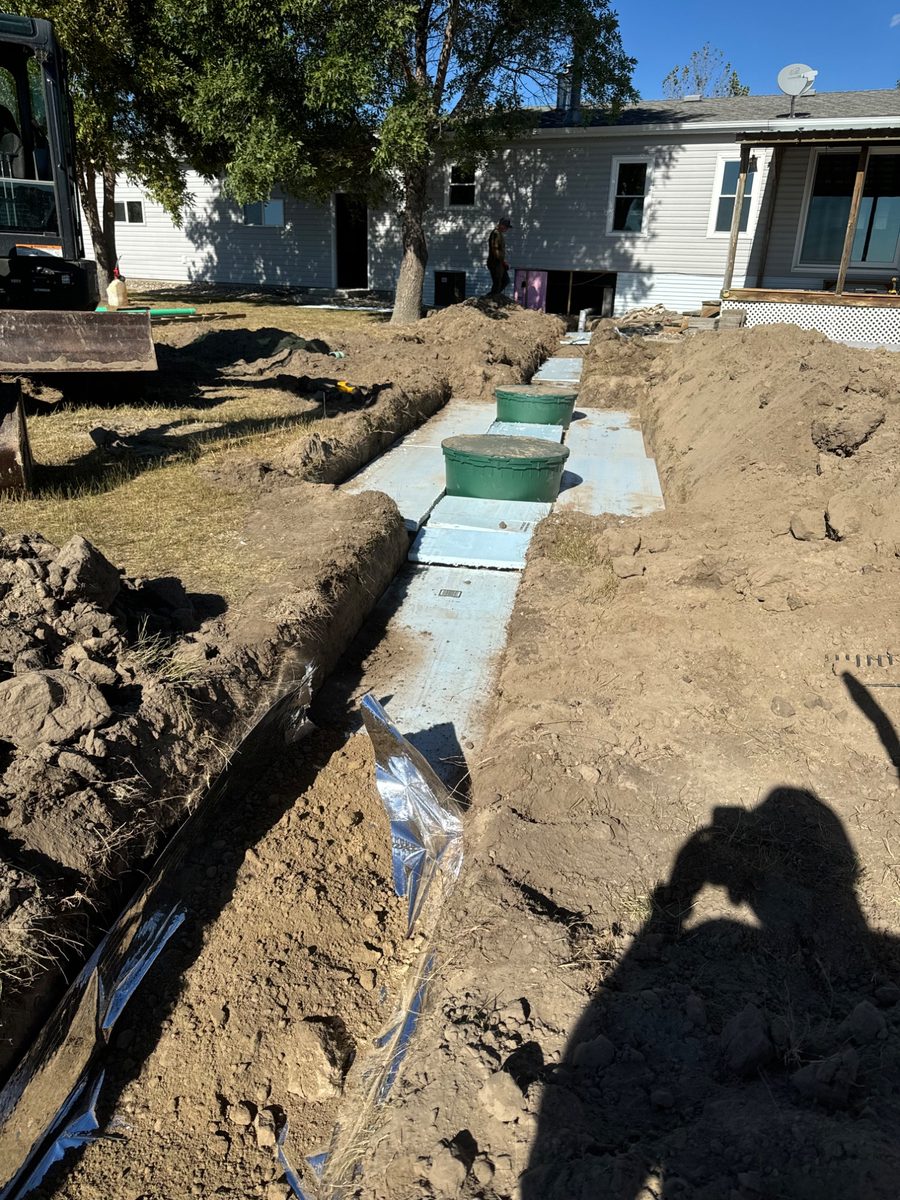
Concrete tank set, inlet and outlet connections made. Infiltrator chambers or gravel field installed with fabric.
Inspection
County inspector called for required inspections before backfill. We coordinate scheduling to keep the project moving.
Backfill & Grade
Site backfilled, compacted, and final grade restored. Mound seeded if required by permit conditions.
North Dakota Expertise
Installing septic in North Dakota isn't the same as anywhere else. Our heavy gumbo clay soils limit drainage and require careful percolation testing to get the right system type. Frost can push tanks and pipes if bedding and depth aren't handled correctly. Spring melt can saturate drainfields that were installed with too little consideration for seasonal water tables.
We've worked in McLean, Burleigh, Morton, Oliver, Mercer, and Ward Counties and understand what each county's health department expects. We build systems that pass inspection and hold up long-term — not just the minimum to get a permit signed off.
Planning a system and want to understand what it'll cost? See our Septic System Cost in North Dakota guide for realistic price ranges and what drives the number up or down.
Frequently Asked Questions
How much does a septic system installation cost in North Dakota?
Costs vary based on system type, tank size, drainfield length, and site conditions. A conventional system for a 3-bedroom home typically runs in the range of $8,000–$15,000 installed, depending on soil, access, and haul distance. Mound systems or pump systems cost more. Call us with your project details for a realistic estimate.
Do I need a permit for septic installation in North Dakota?
Yes. All septic installations in ND require a permit through your county health department, which requires a site evaluation first. We help coordinate this process. The county inspector will also need to approve the installation before we can backfill.
How long does a septic installation take?
Once permitting is complete and weather allows, most installations are done in one to two days of machine time. Permitting lead time varies by county and time of year — plan for several weeks for the permit process before excavation begins.
What's the difference between a conventional system and a mound system?
A conventional system gravity-feeds into a drainfield at or below grade. A mound system elevates the drainfield above natural grade using imported sand fill — required when soil drainage is poor or the seasonal high water table is too close to the surface. Mound systems cost more but are often the only compliant option in certain soil conditions common to Central ND.
Do you install septic systems for rural properties and acreages?
Yes — rural and acreage properties are the majority of our septic work. We're comfortable on remote sites with long haul distances and limited access.
Request a Free Estimate
Tell us about your septic system installation project and we'll get back to you with a straight quote.
Ready to Get Started?
Call Dakota Earthworks for a free estimate on your septic system installation.
Call 701-773-DIRT (3478)